ServicesWhole-house carbon filtration
Whole-House Carbon Filtration in Plano
City water is disinfected before it reaches you, and that disinfectant is what you taste and smell at the tap and in the shower. A whole-house carbon system removes it at the point where water enters your home, so every faucet benefits. We size it, install it neatly and explain the upkeep.
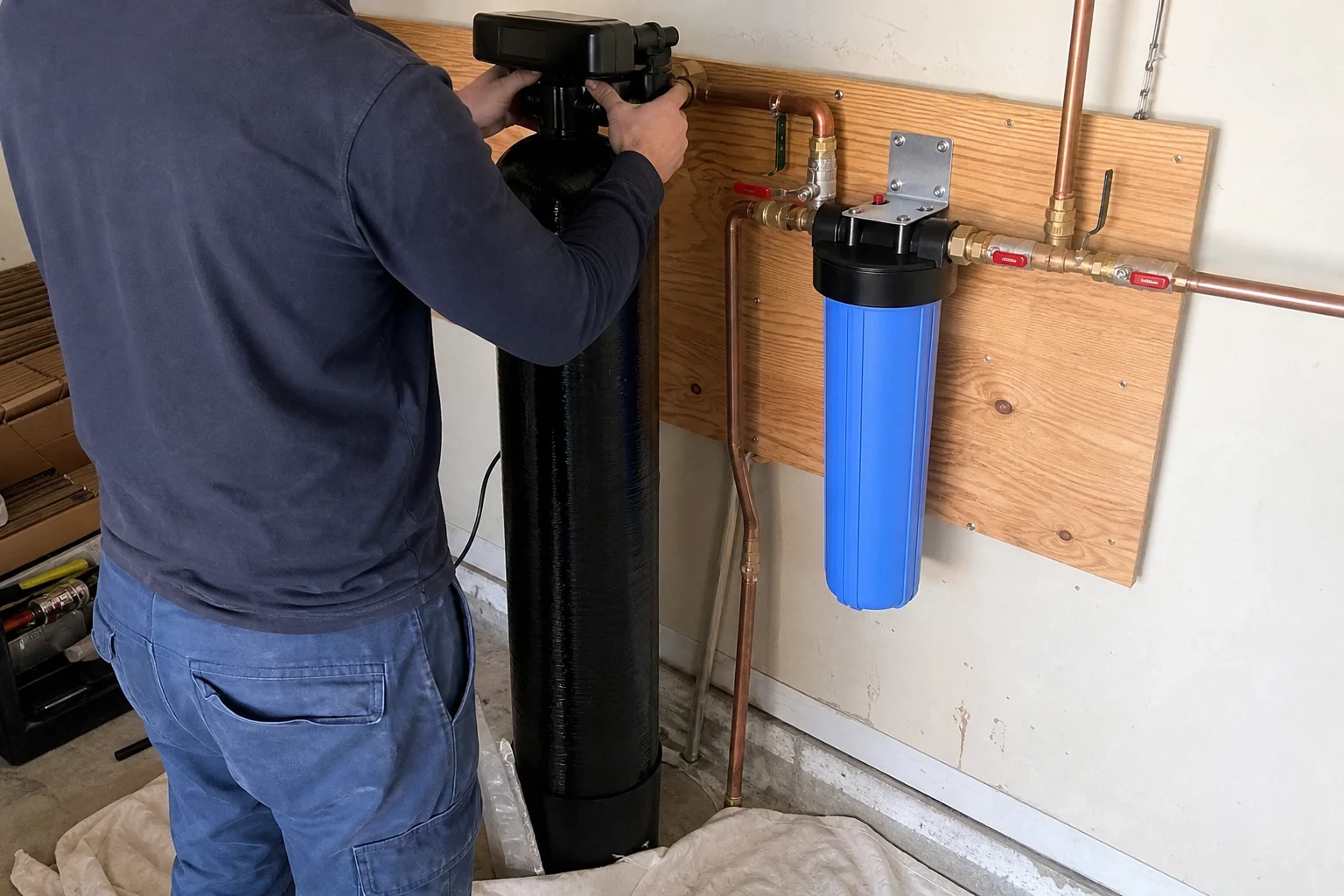
What a carbon system does, and when it fits
Activated carbon has an enormous internal surface area. As water moves slowly through a bed of it, chlorine and many taste and odor compounds stick to the carbon instead of flowing on to your faucets. A whole-house unit puts that bed on the main line, so treated water reaches showers, laundry, the refrigerator and every sink.
It is the right call when your main complaint is taste, smell or dry skin and hair after showering. It is not a softener, and it will not do the job of reverse osmosis for drinking water. If you want both, many homeowners pair a whole-house carbon unit with under-sink reverse osmosis in the kitchen.
Some municipal systems disinfect with chloramine rather than chlorine. Chloramine is harder to remove, and it calls for catalytic carbon and a slower flow through a larger tank. We check what your water carries before we recommend a media, so the system matches the job.
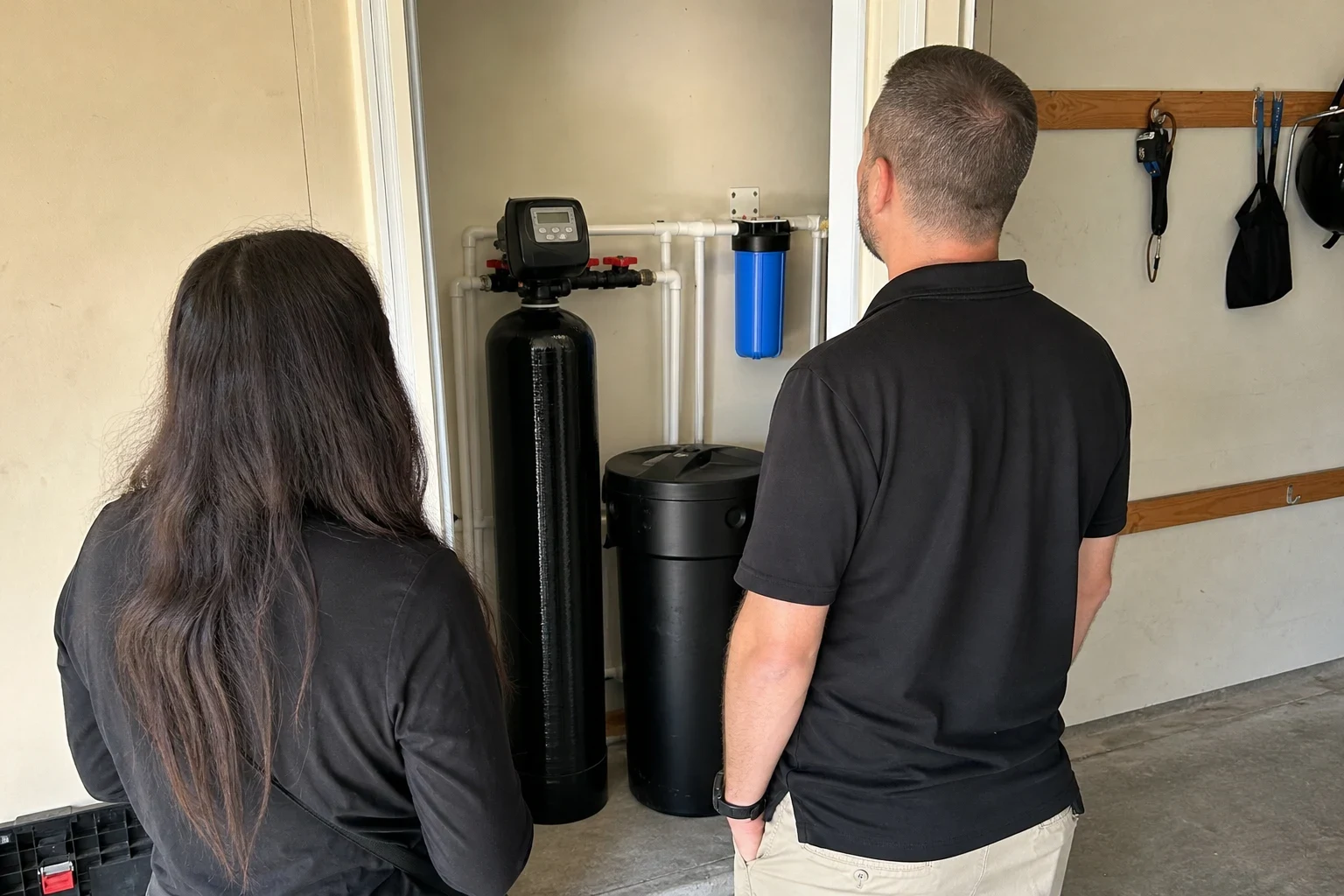
What the installation includes
- 01
A sizing conversation
We count bathrooms, ask how many people live in your home and note your peak water use. Tank size and flow rating follow from that, not from what is on the truck.
- 02
The right carbon media
Standard coconut-shell carbon for chlorine, or catalytic carbon where chloramine is the concern. We tell you which one we chose and why.
- 03
A sediment prefilter
A simple cartridge ahead of the carbon catches grit so the carbon bed lasts longer and stays efficient.
- 04
Bypass valve and clean plumbing
Every system gets a bypass so you can keep water running during service. We use proper fittings, support the lines and leave the connections tidy and labeled.
- 05
Startup and a walkthrough
We flush the new media until it runs clear, check for leaks and show you the bypass, the prefilter and when each part needs attention.
Questions about Whole-house carbon filtration?
Call(972) 833-2197Signs a whole-house carbon filter makes sense
A pool smell in the bathroom
Warm water lets chlorine escape as vapor, which is why the smell is usually strongest while you bathe. A kitchen pitcher filter never touches that water.
Dry skin or brittle hair
Many people feel a difference after showering in dechlorinated water. It is a comfort benefit, and we describe it that way.
Coffee, tea or ice tastes off
Chlorine flavors carry into anything made with tap water, including ice from the refrigerator line.
Too many separate filters
If you are changing a fridge filter, a faucet filter and a shower head filter, one system on the main line can replace most of that routine.
Seasonal changes in taste
When the city adjusts its treatment, the smell can come and go. A carbon bed handles those swings without you having to think about it.
How the job runs
- 1
Look at your water and your plumbing
We find where the main line enters, often near the garage in homes around Plano, and check the space, the pipe size and the nearest drain. If you have questions about what is in your water, we can start with water testing.
- 2
Recommend one system, in writing
You get a written estimate listing the tank, the media, the prefilter and the plumbing work line by line. If carbon is not the right answer for your complaint, we say so.
- 3
Install on the day
We shut the water off, protect the floor and the surrounding area, and cut in the bypass and system. Most installs take part of a day, and your water is off for only a portion of that.
- 4
Flush, test and clean up
We rinse the carbon fines out, check every joint under pressure and taste the water with you. Packaging and pipe offcuts leave with us.
What moves the cost
You see a written price before we start any work. Two things drive most of it: how much water your home draws at the same moment, and what the carbon has to take out. These are the details that push it up or down.
- Tank size and flow rating
- A larger home with several bathrooms running at once needs more carbon and a higher flow rating so pressure does not drop.
- Carbon grade
- Water treated with chloramine calls for a catalytic grade, which is priced above ordinary coconut-shell media. That grade also tends to need a deeper bed, so the water stays in contact long enough to be treated.
- Install location
- Mounting the tank beside the main line on an open garage wall takes little extra work. A cramped closet, a long pipe run to reach the line or no drain within reach means more labor and more material.
- Tank or cartridge design
- Backwashing tanks cost more up front and last longer between media changes. Large cartridge housings cost less to start and need more frequent filter changes.
Questions about whole-house carbon filtration
Will a whole-house carbon filter lower my water pressure?
Not noticeably, if it is sized correctly. Pressure loss comes from undersized tanks and clogged prefilters. We match the flow rating to your bathroom count and show you when to change the prefilter.
How long does the carbon last before it needs changing?
That comes down to how much water your household runs, how big the tank is and how much chlorine the carbon is pulling out. A large backwashing tank usually goes several years before the media is swapped, while cartridge housings need fresh filters more often. Our filter replacement and maintenance service covers both designs.
Is this the same as a water softener?
No. Carbon removes chlorine and taste and odor compounds; it does not remove hardness minerals. If spotting or scale is your concern, we would check hardness first and talk about water softeners only if the test supports it.
Do I still need a drinking water filter?
Not for taste. Carbon alone usually makes tap water pleasant to drink. If you want a further reduction of dissolved solids or lead from older fixtures, under-sink reverse osmosis at the kitchen sink adds that.
Does it remove iron or sediment?
The prefilter catches light grit, but carbon is not built for iron. If you see orange staining or cloudy water, iron and sediment filtration is the better first step, and we can plan the two together.
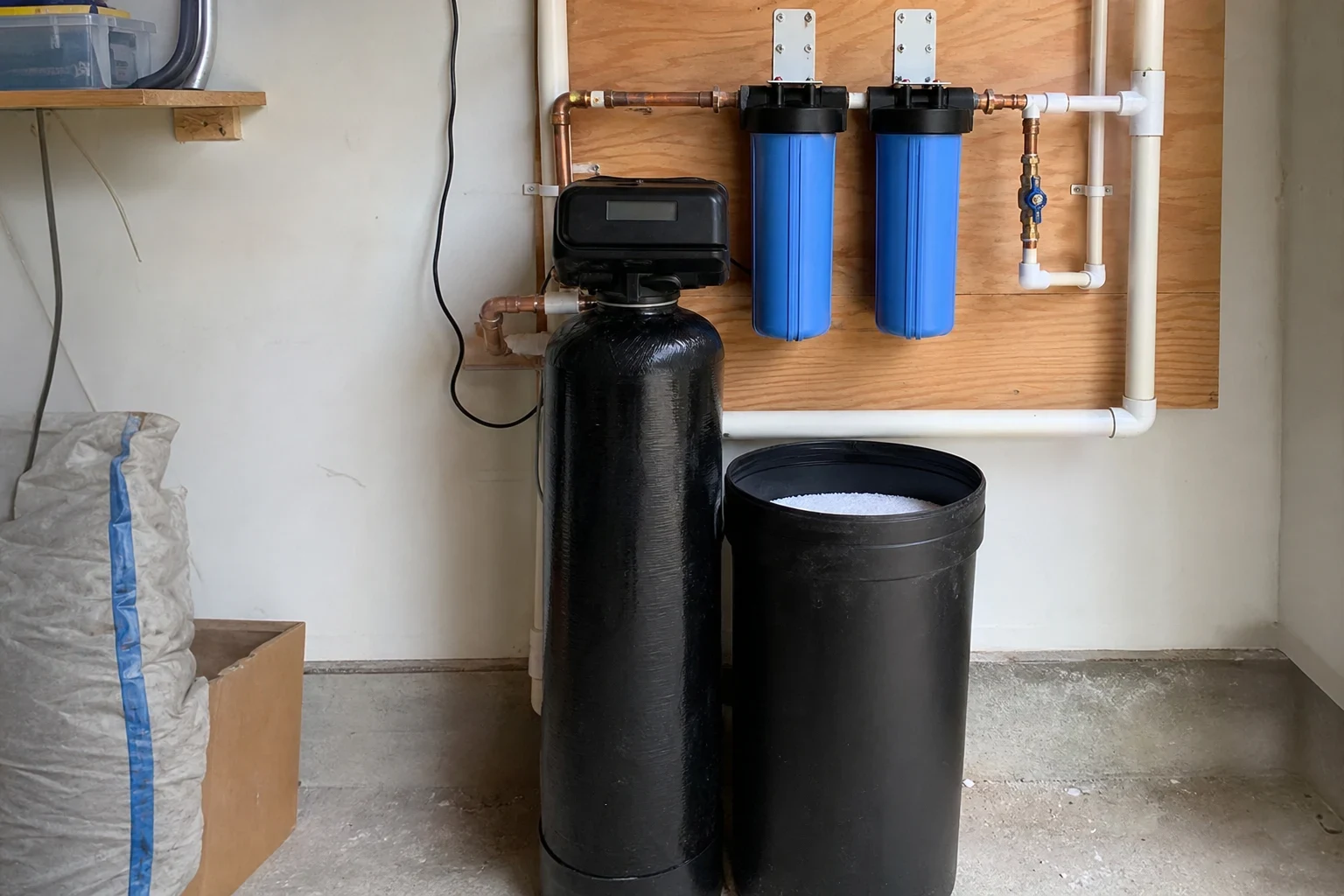
Find out which carbon system fits your home
We serve Plano and nearby towns including Richardson, Allen and Frisco. Tell us what you are tasting and smelling, and we will set up a visit to look at your plumbing and give you a written estimate.