ServicesWater testing
Water Testing in Plano
Before you buy a filter or a softener, know what your water actually contains. We test at the tap, explain each number in plain terms, and tell you whether treatment makes sense. Sometimes the honest answer is that your water is fine as it is.
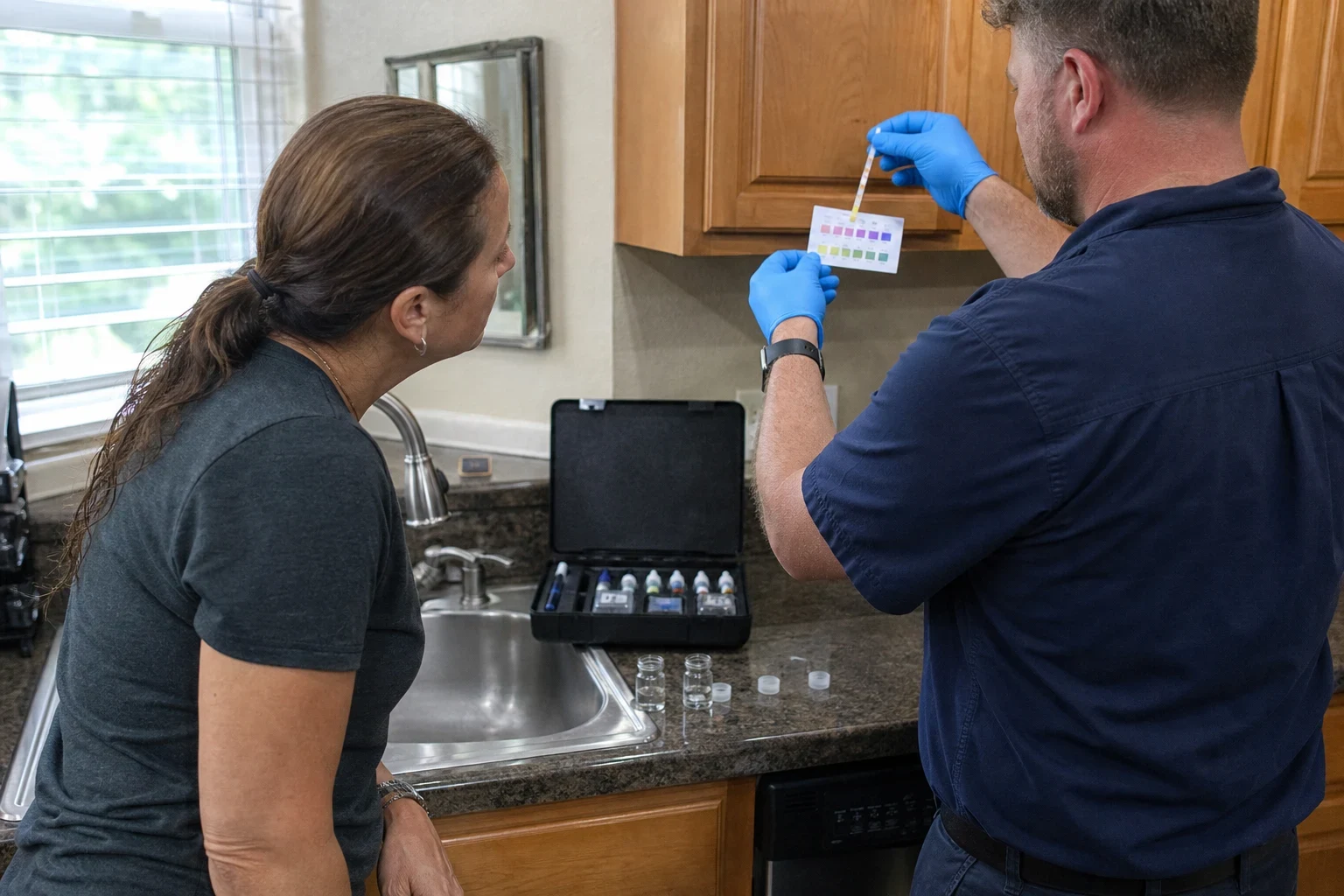
What a water test tells you
City water in Plano is treated and meets federal standards when it leaves the plant. What reaches your glass can still differ. The disinfectant the utility adds can affect taste and smell. Older pipes and fixtures inside your home can add metals. Mineral content decides whether scale builds on glass shower doors and inside the water heater.
A test separates those questions. We measure what is there, compare it to the limits that matter, and show you which numbers point to a real problem and which do not. That answer comes before any equipment conversation, and it decides whether there needs to be one.
What the visit includes
On-site screening
We check hardness, total dissolved solids, pH, iron and disinfectant level at your kitchen tap. You watch the readings as we take them.
Point-of-use comparison
If you notice a difference between rooms, we sample more than one tap. A bathroom that tastes off while the kitchen does not usually points to plumbing, not the supply.
Independent lab testing when needed
Some questions, such as lead or a broader contaminant panel, need a professional laboratory rather than a field kit. We collect the sample the way the lab requires, send it out, and go over the report with you when it returns.
A written summary
You get your results in writing with a short note on each one: normal, worth watching, or worth treating. Keep it, share it, or get a second opinion.
An honest recommendation
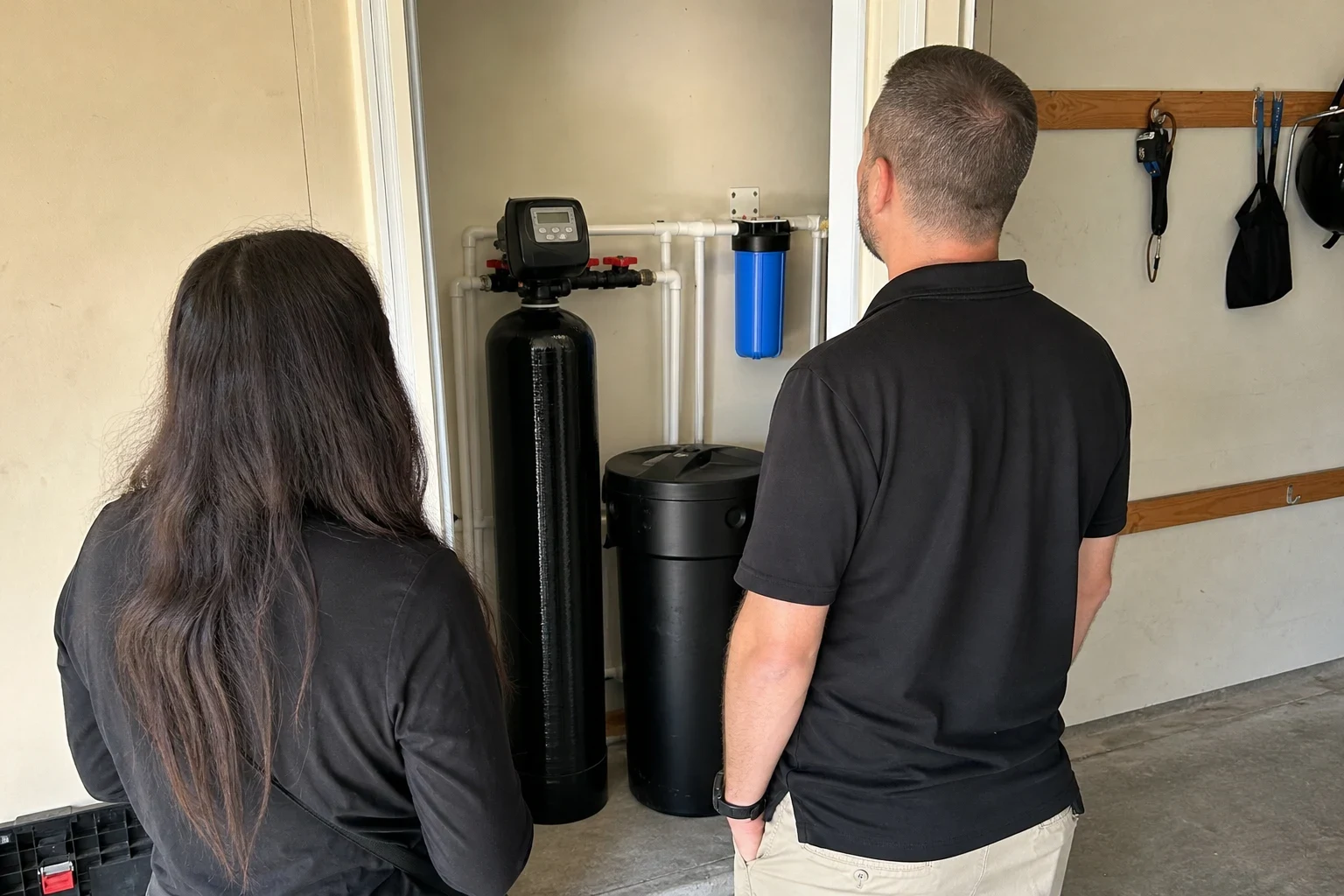
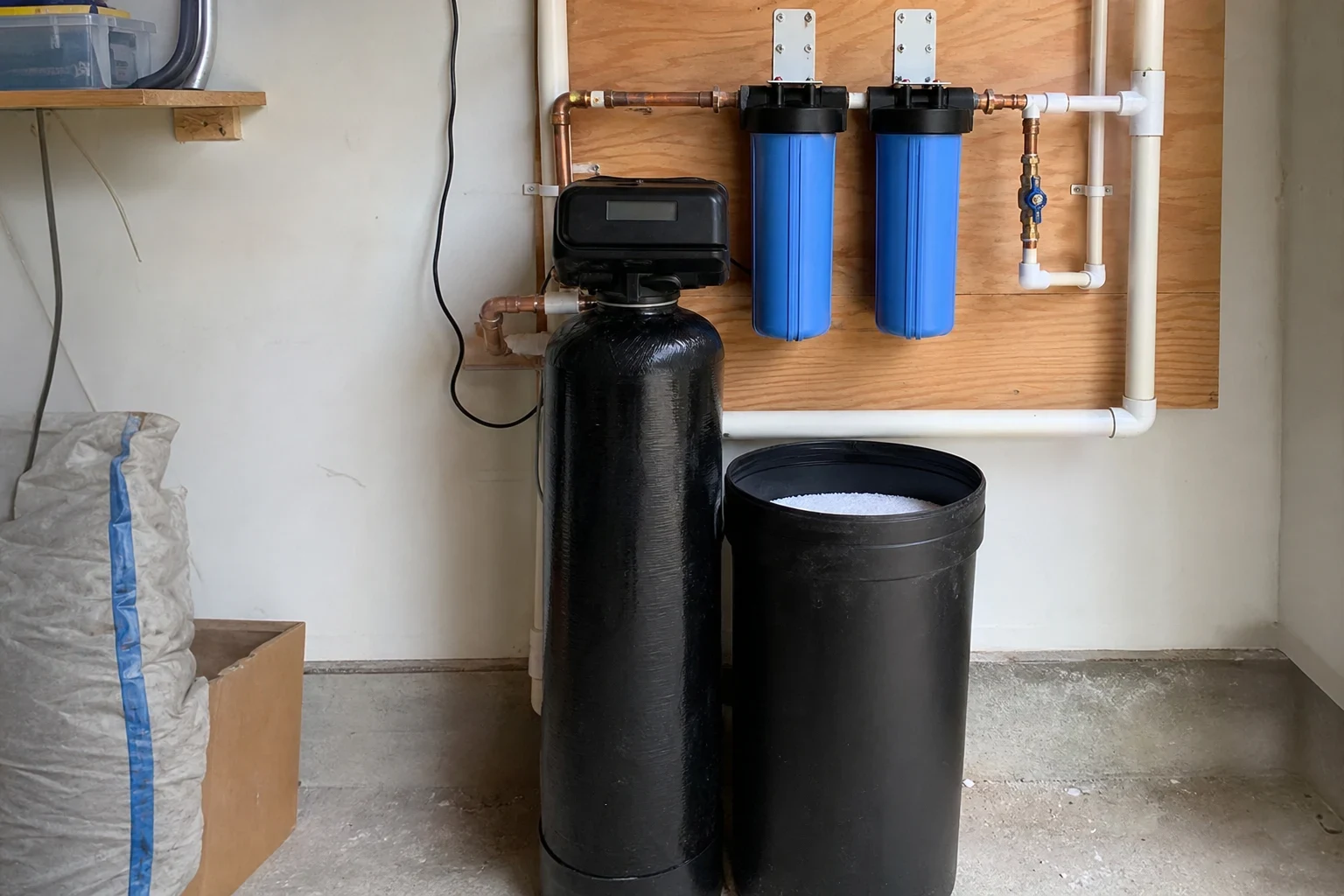
If treatment fits, we explain the option that matches the result, whether that is whole-house carbon filtration, under-sink reverse osmosis or a softener. If nothing is needed, we say so.
When testing is worth doing
- Your water tastes or smells like a pool
- A strong disinfectant taste is common on municipal water. A test confirms the level and tells you whether carbon filtration would fix it.
- White crust on fixtures and glass
- Spots on shower doors and buildup around faucet aerators suggest mineral content. Measuring hardness first keeps you from buying a softener you may not need.
- Orange or brown staining
- Rust-colored marks in sinks, toilets or laundry often mean iron or corroding pipe. Testing shows which, and the fix is different for each.
- An older home or recent plumbing work
- Homes built before 1986 may have lead solder on copper joints. Testing is the only way to know whether any reaches the tap.
- A baby, a new filter, or a new house
- Plenty of people test simply to have a baseline. It also helps to confirm that an existing system is still doing its job.
How the appointment runs
- 1
A short call first
We ask what you have noticed, the age of your home and whether you already have any treatment installed. That tells us which tests to bring.
- 2
Sampling at your taps
We run the water as each test requires, take samples with clean equipment, and work neatly around your sink and cabinets. Most screenings take under an hour.
- 3
Results at the counter
Field results are explained on the spot. Lab samples are sealed, labeled and sent out, and we follow up when the report arrives.
- 4
Options, if any
We lay out what the numbers mean and what, if anything, would change them. There is no pressure to decide that day.
What affects the cost of testing
Testing costs depend mostly on how far the questions go. A basic screening covers most taste and scale concerns. Lab work adds cost but answers questions a field kit cannot. We tell you the price of each before any sample is taken.
- Field screening or lab panel
- On-site tests for hardness, iron and disinfectant are quick. Lead, bacteria and wider contaminant panels go to a lab, and lab fees vary by panel.
- Number of sample points
- One kitchen tap is the usual starting point. Testing several taps, or before and after an existing filter, takes more time and more samples.
- City water or private well
- A well needs a broader set of tests, including bacteria, because no utility is treating it first.
- Follow-up testing
- A retest after a system is installed confirms it is working. Some people also retest yearly to track changes.
Common questions about testing
- Doesn't the city already test my water?
- Yes. The supplier takes samples on a set schedule and publishes an annual water quality report that anyone can look up. Those results cover the water only as far as your property line. After that it passes through your service line, your pipes and your fixtures, and that stretch is where a lot of taste, staining and lead concerns start.
- Will the test turn into a sales pitch?
- Not unless your numbers call for equipment. When results fall in normal ranges and the taste does not bother you, we will say plainly that nothing needs fixing. A test that always points to a purchase is not worth much.
- Is an in-home test as accurate as a lab?
- For hardness, pH, iron and disinfectant, field tests give dependable readings. For lead and trace contaminants at very low levels, they are the wrong tool. In those cases we suggest an independent lab and take the sample with care so the result can be trusted.
- Should hardness be tested before I buy a softener?
- In our view, yes. Hardness differs from home to home, and a softener brings salt, upkeep and expense. When the reading does not support one, our page on water softeners after a hardness test covers what we would recommend instead.
- When will lab results come back?
- The wait varies with the panel and how busy the lab is. We give you an expected timeline when we take the sample, and we walk through the report with you as soon as it arrives.
Get the facts on your water first
Testing shows you where things stand before you spend anything on equipment. We work in Plano and in nearby towns such as Richardson, Allen and Frisco.