ServicesIron and sediment filtration
Iron and Sediment Filtration in Plano
Orange stains, gritty aerators and cloudy water have a cause. We test first to find where the iron or sediment comes from, then fit a filter sized for your home's flow and plumbing. Sometimes the right answer is a different repair, and we will tell you that.
What this filtration does, and when it is the right call
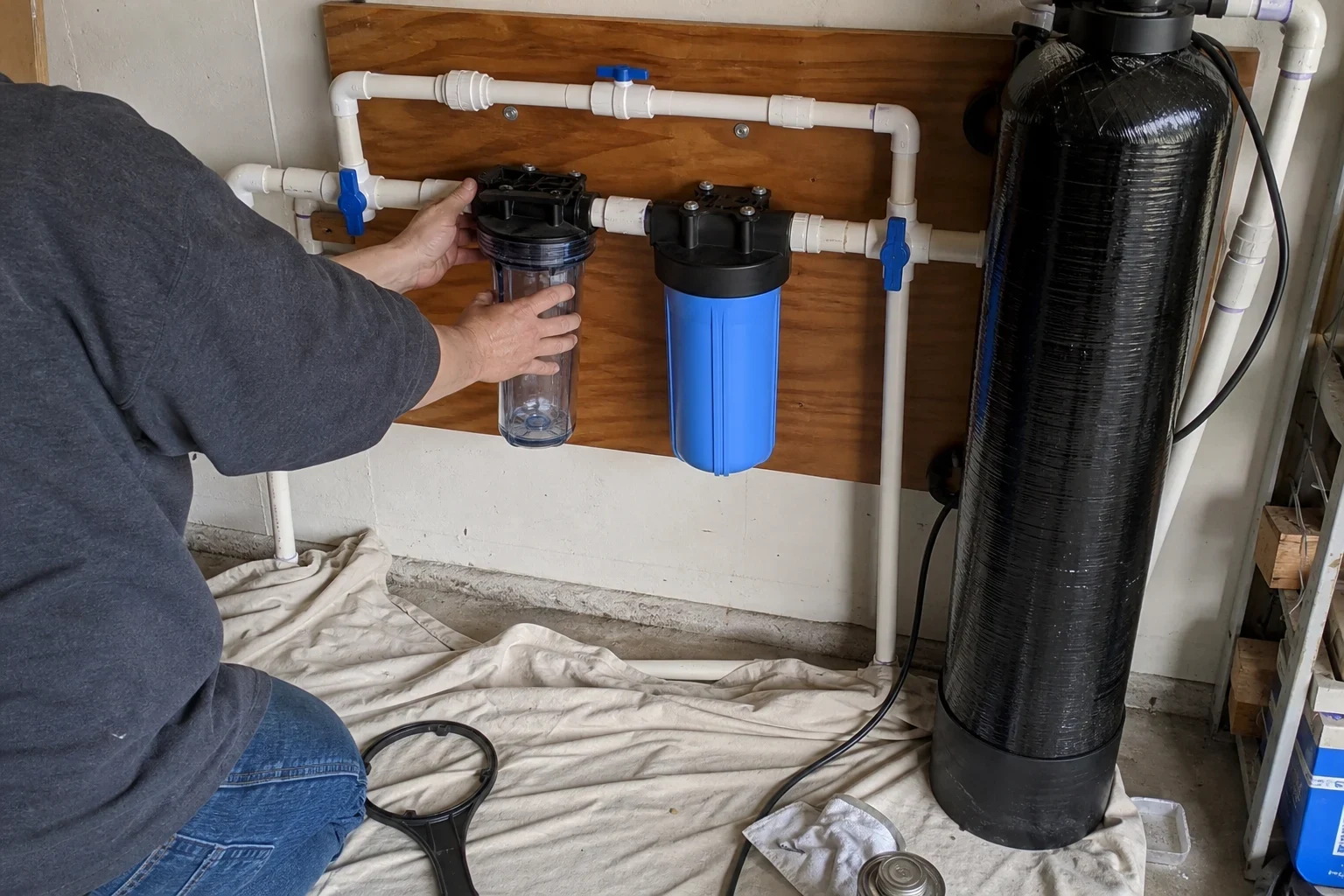
Sediment filters catch physical particles: sand, grit, pipe scale and the fine silt that can come through after work on a water main. Iron filtration handles dissolved or rust-colored iron that stains fixtures, laundry and tile grout. The two often share a housing at the point where water enters your home.
The straight answer is that rust in a tap does not always mean rust in the supply. In many homes it comes from aging galvanized pipe or a water heater tank near the end of its life. A filter at the main will not fix iron that is picked up after the filter. That is why we test at more than one tap before we recommend equipment.
When the source is incoming water, or your home is on a private well, a properly sized system protects fixtures, appliance valves and any carbon or reverse osmosis equipment installed downstream.
What the work includes
Testing at more than one point
We check iron, turbidity and related readings at the main and at an affected tap. Comparing the two tells us whether the problem enters your home or starts inside it.
Choosing the right filter type
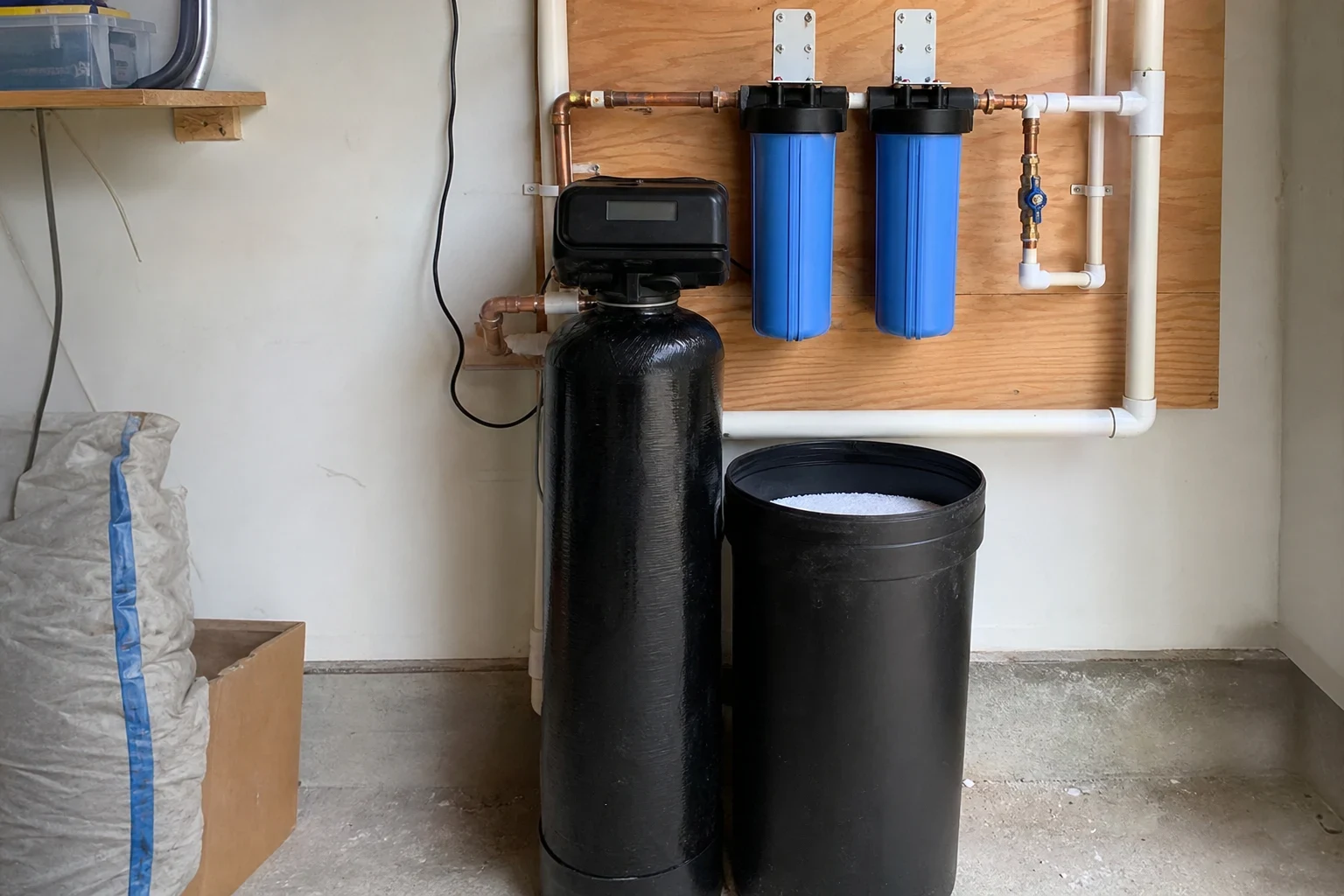
For grit and sand, a spin-down screen or a cartridge housing usually does the job. For higher iron, typical of well water, a backwashing tank with oxidizing media is the better fit. We explain why we chose one over the other.
Sizing for flow
An undersized filter drops water pressure when two showers run at once. We size housings and port connections to your home's fixtures and pipe diameter.
Careful installation
We plumb in isolation valves and a bypass loop, so a cartridge swap or media service never leaves the rest of the house dry. Work areas are covered, and we leave the space the way we found it.
A plain maintenance plan
Before we leave, you get a written card listing your cartridge sizes and how often each one should be swapped. It also notes the early clues of a full filter, such as weaker pressure or a darkened cartridge. If you would rather not keep track yourself, we can take over the swaps through our filter replacement and maintenance visits.
Signs iron or sediment is getting through
- Orange or brown stains
- Rings in toilet tanks, streaks under faucets and rust tones on white laundry point to iron.
- Clogged aerators and showerheads
- Grit collecting in faucet screens means particles are traveling through your lines.
- Cloudy or tinted water
- Water that looks hazy or yellow, especially first thing in the morning, can signal sediment or rust from pipes.
- Appliance trouble
- Fill valves on dishwashers, washers and ice makers fail early when grit wears their seals.
- Metallic taste
- A tinny taste is often the first sign of iron, before staining shows up.
How the job runs
- 1
Phone conversation
You describe what you are seeing and where. We ask about the age of your plumbing and water heater, and if your home draws from city water or a private well.
- 2
Test and find the source
We sample at the main and at the problem taps. You see the readings and hear what they mean before any equipment is discussed.
- 3
Written recommendation
If filtration is the fix, you get a line-item estimate covering the system, parts and labor. If the cause is a water heater or old pipe, we say so plainly.
- 4
Installation day
Most installs take part of a day. Water is off for a short stretch, and we test again after the system is running so you can compare.
What moves the cost
Price depends on what your water needs and where the filter has to go. A simple sediment housing and a backwashing iron system are very different jobs. Your estimate lists each part so you can see where the money goes.
- Type of system
- Cartridge and spin-down filters cost less up front. Backwashing media tanks cost more but handle heavy iron without constant cartridge changes.
- Iron and sediment levels
- Higher readings call for larger media beds or two filtration stages.
- Location and access
- A main line in a garage is straightforward. Tight closets, slab entries or lines that need rerouting add labor.
- Pipe size and flow
- Larger homes with more bathrooms need larger housings and fittings to keep pressure steady.
- Drain and power
- Backwashing systems need a nearby drain and an outlet; adding either changes the scope.
Questions about iron and sediment filtration
- Is iron in my water a health problem?
- At the levels usually found in household water, iron is mostly a staining, taste and equipment issue rather than a health one. It still costs money in ruined laundry and worn appliance parts. A test tells you how much is there and whether filtering it makes sense.
- Why do I only see rust in hot water?
- That usually points to the water heater. As the tank's lining and anode wear, rust and sediment build up inside it. Flushing or replacing the heater may solve it, and a whole-house filter would not.
- Will a sediment filter lower my water pressure?
- A correctly sized one should not cause a noticeable drop. Pressure falls when a cartridge is too small for your home or is overdue for a change. We size for your fixtures and show you how to spot a clogged cartridge.
- How often do cartridges need changing?
- The interval follows the amount of grit in your supply. One house may run several months between changes, while another needs them sooner after a nearby main repair stirs up the lines. We set a starting schedule, look at the first used cartridge and adjust from there.
- Do I still need this if I am getting carbon filtration or reverse osmosis?
- Often, yes. A sediment stage in front keeps grit from clogging carbon media and reverse osmosis membranes early. We can plan it alongside whole-house carbon filtration or under-sink reverse osmosis.
Find out where the rust is coming from
Tell us what you are seeing and we will explain the likely causes and how we would test for them. You will know your options before anything is installed.