ServicesWater softeners
Water Softeners in Plano, Sized From a Hardness Test
A softener only makes sense when your water is hard enough to cause scale, spotting or dry skin. We test first, show you the number, and if a softener is the right call we size it to your household and install it neatly near your main line.
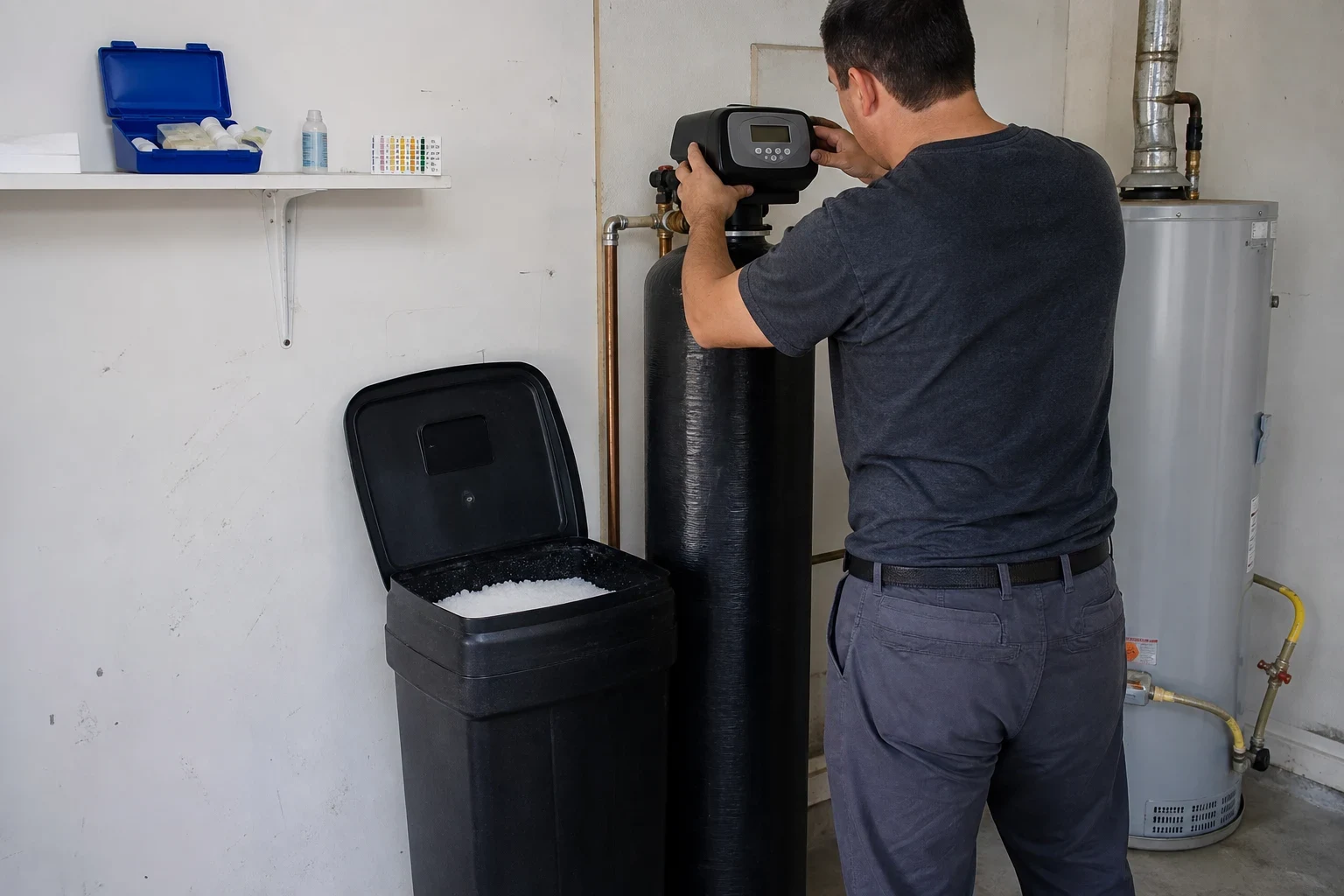
A softener should follow the test, not the sales pitch
Hard water carries dissolved calcium and magnesium. Over time those minerals build chalky deposits on faucets, a haze on glassware and a layer of scale inside your water heater. A softener pulls them out by ion exchange. Water flows through a tank of small resin beads that hold onto the hardness minerals and release sodium or potassium in their place, and on a set schedule the system flushes the beads with brine so they can keep working.
Hardness varies from home to home and can change over time, so we never recommend a softener from a guess. We measure your water in grains per gallon, explain what that reading means for your fixtures and appliances, and tell you plainly if a softener is worth it. Sometimes the better answer is a whole-house carbon filtration system for taste, or iron and sediment filtration for staining. When that is the case, we say so.
What you get with our softener service
- Hardness measured at your home
- We take a reading at one of your taps before talking about any equipment. You see the number, and it is yours to keep.
- Capacity matched to your home
- We size the unit from your hardness reading and your daily water use. Too small, and it regenerates constantly and burns through salt; too large, and you pay for capacity you never use.
- A valve that meters water use
- We prefer demand-based valves, which regenerate once a set amount of water has gone through instead of on a timer. Salt and rinse water then track what your household really uses.
- Neat, careful installation
- A bypass valve lets you take the system offline, and the drain line gets a proper air gap. Pipes are kept neat and supported, floors stay covered during the work, and all packaging leaves with us.
- Programming and a quick tour
- We set the valve to match your reading, fill the brine tank with salt, and show you how to check the salt level and work the bypass.
Signs your water may be hard enough for a softener
White crust on fixtures
Chalky buildup around faucet aerators and showerheads that returns soon after cleaning usually points to calcium and magnesium.
Spotted glasses and shower doors
Mineral spots that dry onto glass and stainless steel are a common early sign.
A noisy or slow water heater
Popping or rumbling from a tank heater can mean scale has settled on the bottom, which cuts efficiency over time.
Soap that will not lather
Hard water reacts with soap and leaves a film on skin, hair and tile, so you use more product for less result.
Stiff laundry
Minerals left in fabric can make towels feel rough and colors look dull after a few months of washing.
How a softener job runs
- 1
Test and talk
We take a hardness reading and check for iron, which can foul softener resin. Then we go over the results with you and give an honest yes or no on a softener.
- 2
Written recommendation
If a softener fits, you get a written estimate that lists the unit size, valve, materials and labor line by line, so you can compare it fairly.
- 3
Installation day
We shut off the water, set the resin and brine tanks near where the main line enters your home, often the garage, and plumb in the bypass and drain. Most homes are without water for only part of the visit.
- 4
Programming and check
We set the valve to your hardness, run a regeneration, and test the water again at a tap so you can see the change before we leave.
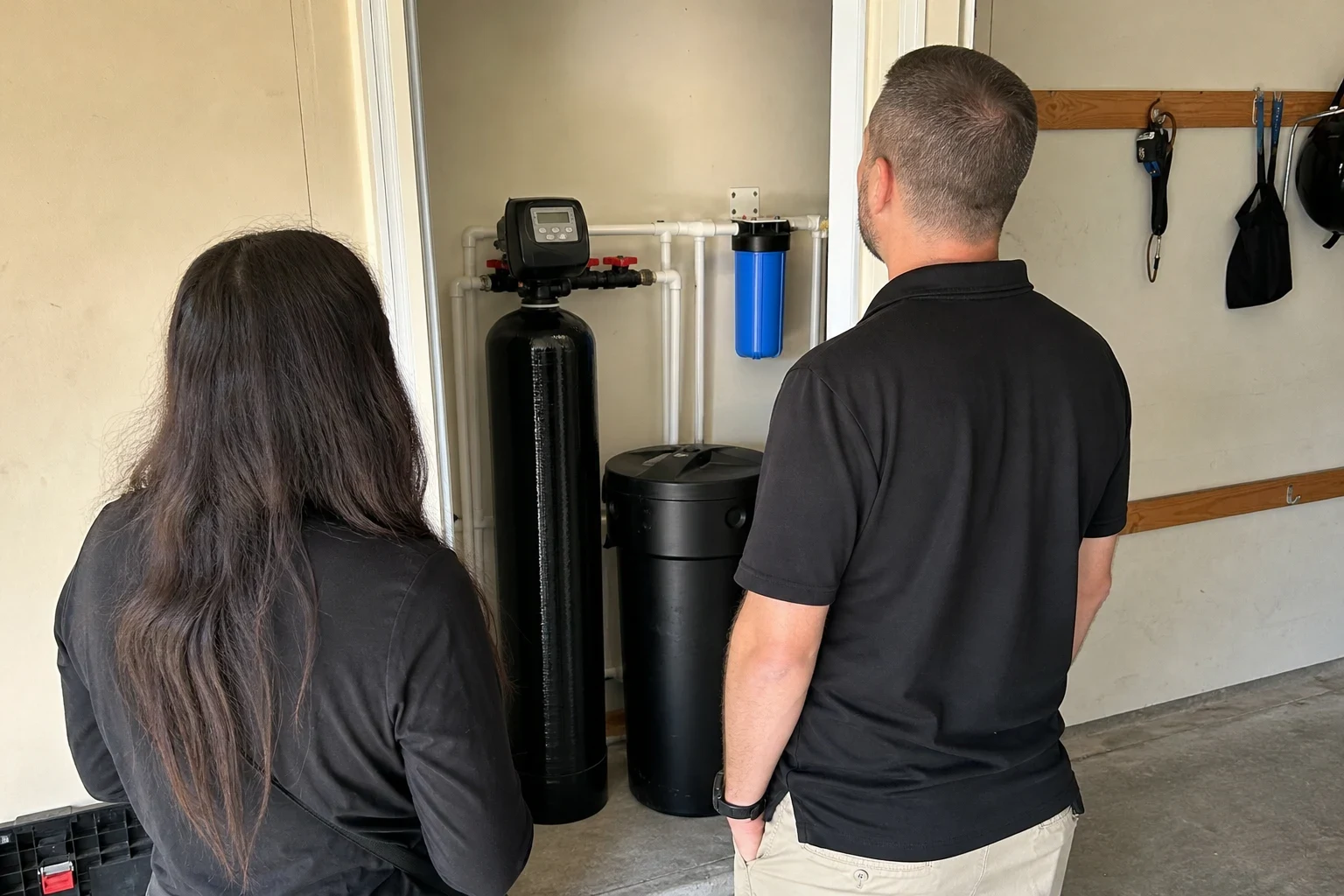
What moves the cost of a softener
The price depends mostly on how hard your water is, how much your household uses, and how easy it is to tie into your plumbing. We explain each line on the estimate so nothing on the final bill comes as a surprise.
- Hardness and water use
- Harder water and larger households need more resin capacity, which means a bigger tank.
- Plumbing access
- Homes with an existing softener loop are simpler. Without one, we run new pipe from the main line, and the distance and route affect labor.
- Drain and power
- The valve needs a nearby outlet and a drain for rinse water. If either is missing, adding it is part of the job.
- Iron or sediment
- If your test shows iron or grit, a pre-filter may be needed to protect the resin and keep the softener working longer.
Water softener questions
Something not covered here? (972) 833-2197
Does every home in Plano need a softener?
No. Hardness differs from one home to the next, and some readings are low enough that a softener adds cost without much benefit. That is why we test first. If the number does not justify it, we will tell you.
Will softened water taste salty?
At typical hardness levels the sodium added is small and most people cannot taste it. If you would rather avoid it, potassium chloride can replace salt, or you can pair the softener with under-sink reverse osmosis for drinking water.
How often do I add salt?
It depends on your hardness, your water use and the tank size. Many households check the brine tank once a month and top it up when the salt drops below the water line. We show you what to look for.
What about salt-free conditioners?
Salt-free systems do not remove hardness minerals; they change how scale forms. They can help in some cases, but they will not stop spotting the way a true softener does. We explain the difference using your test result.
Does a softener need ongoing service?
Resin lasts many years when it is protected from iron and chlorine, but the brine tank should be cleaned occasionally and the valve settings checked. Our filter replacement and maintenance visits can cover that.
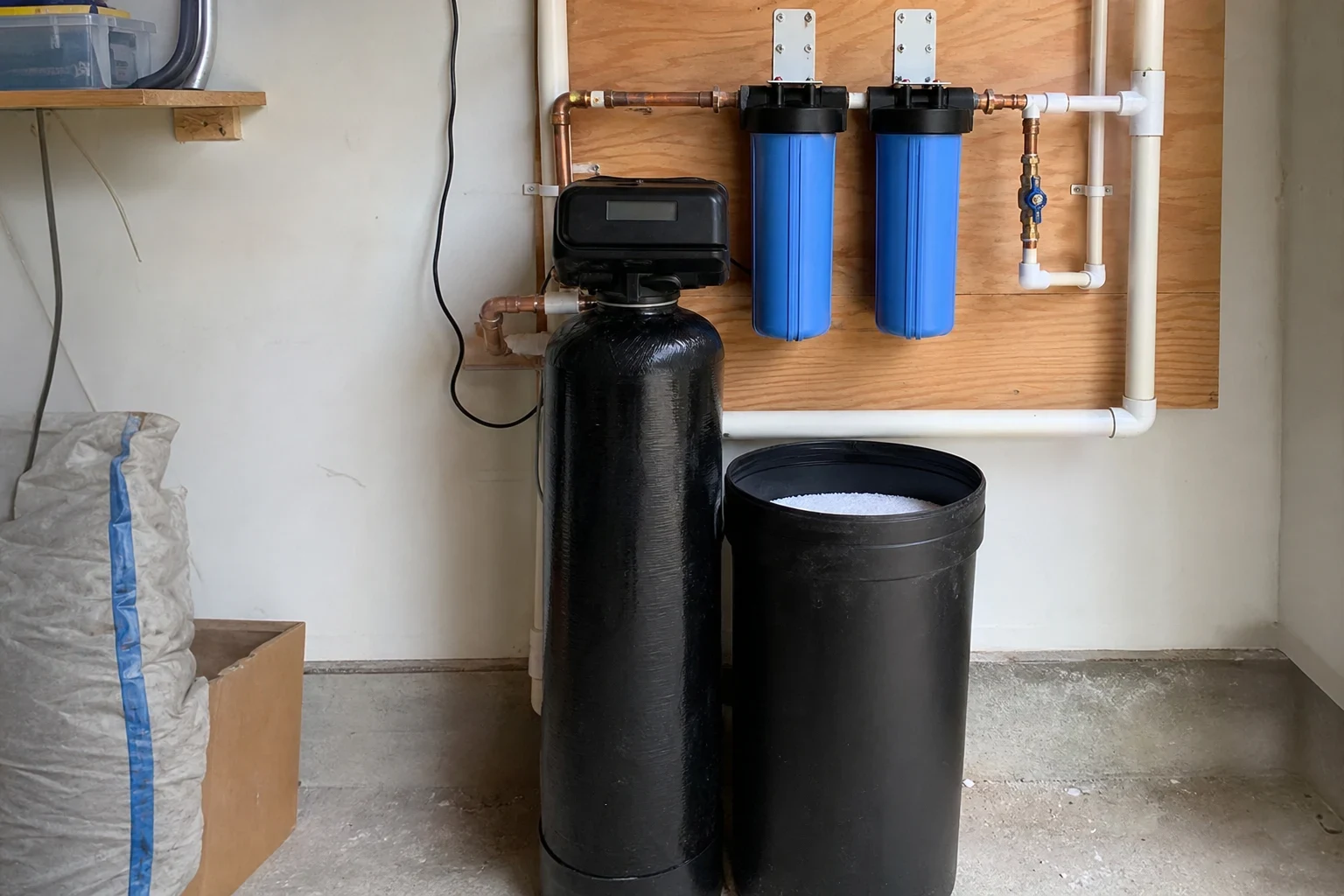
Find out if a softener is worth it for your home
We will test your water's hardness, show you the reading and give you a straight recommendation. If a softener fits, you get a written estimate before any work begins.